Our curriculum

Islamic values are not a separate lesson

Most children we teach are studying two things at once — a school syllabus in one language and their deen in another, on different evenings, with nothing joining them up. Our answer is not to add a third thing that spans the two. It is to stop teaching them as two. A child who looks closely enough at a cell, a circuit or the orbit of a planet meets order, and is asked the honest question of who put it there — and what recognising Him then asks of them.

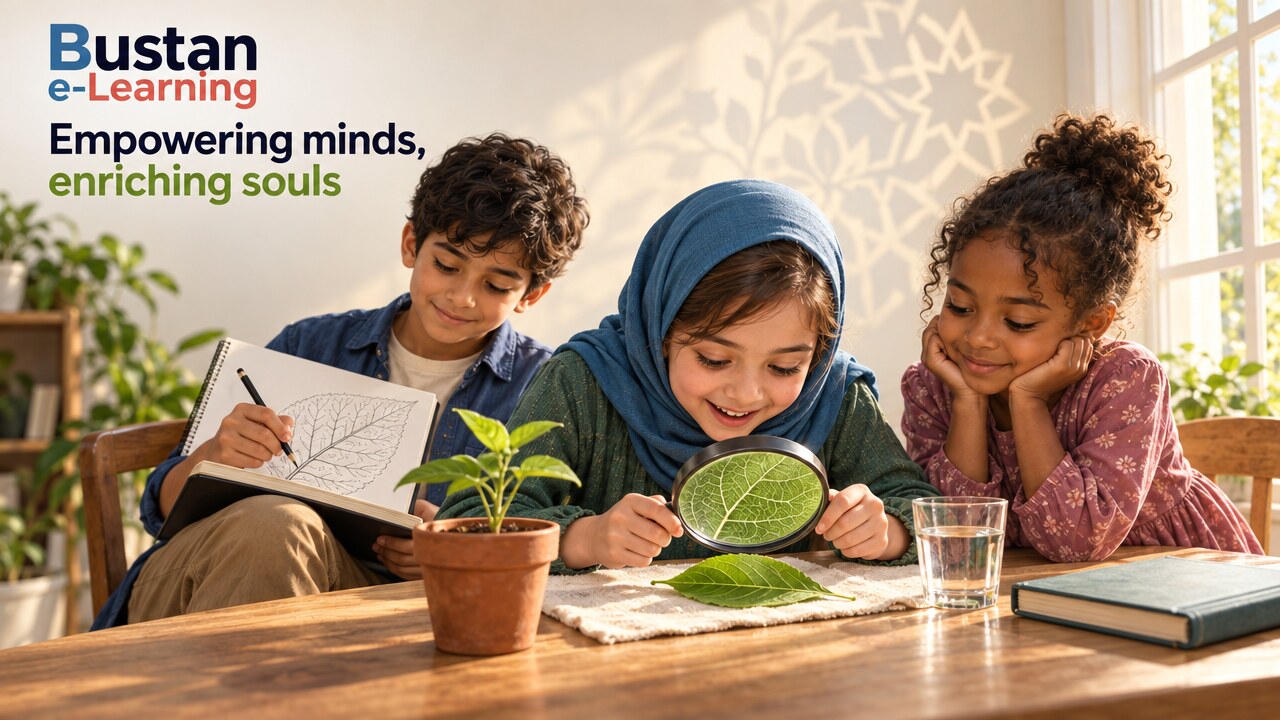
Three children at a sunlit table, one looking closely at a leaf through a magnifying glass while another draws its veins

What it is for

What it is trying to produce, in every subject

A curriculum should be able to say what it is trying to produce. Ours is trying to produce a particular kind of person, and every strand below is asked to contribute to all of these rather than to specialise in one.

To recognise the Creator

Not as a fact a child is told and repeats back, but as something they arrive at by looking. The order in a leaf, a lung, a number system or an orbit is real, and a child who understands how it actually works has a reason to say Alhamdulillah that nobody had to hand them. Taught well, science is not a threat to belief. It is one of the better arguments for it.

To become productive

Recognising Him carries obligations, and the first of them is competence. Work done properly, finished rather than abandoned, accurate because someone will rely on it. A child who cannot do anything well has nothing to offer anyone, however sincere they are. Skill is part of character here, not separate from it.

To be of use to other people

What the competence is for. Carrying your share, being someone your neighbours are glad to have nearby, leaving a place better than you found it. This is the test we would want applied to any of our students in twenty years, and it is a harder one than marks.

The strands

Every strand carries the same thread

They are listed separately because a timetable has to be written down. They are not taught separately. Each one below says what is covered, and what it is doing for the three outcomes above.

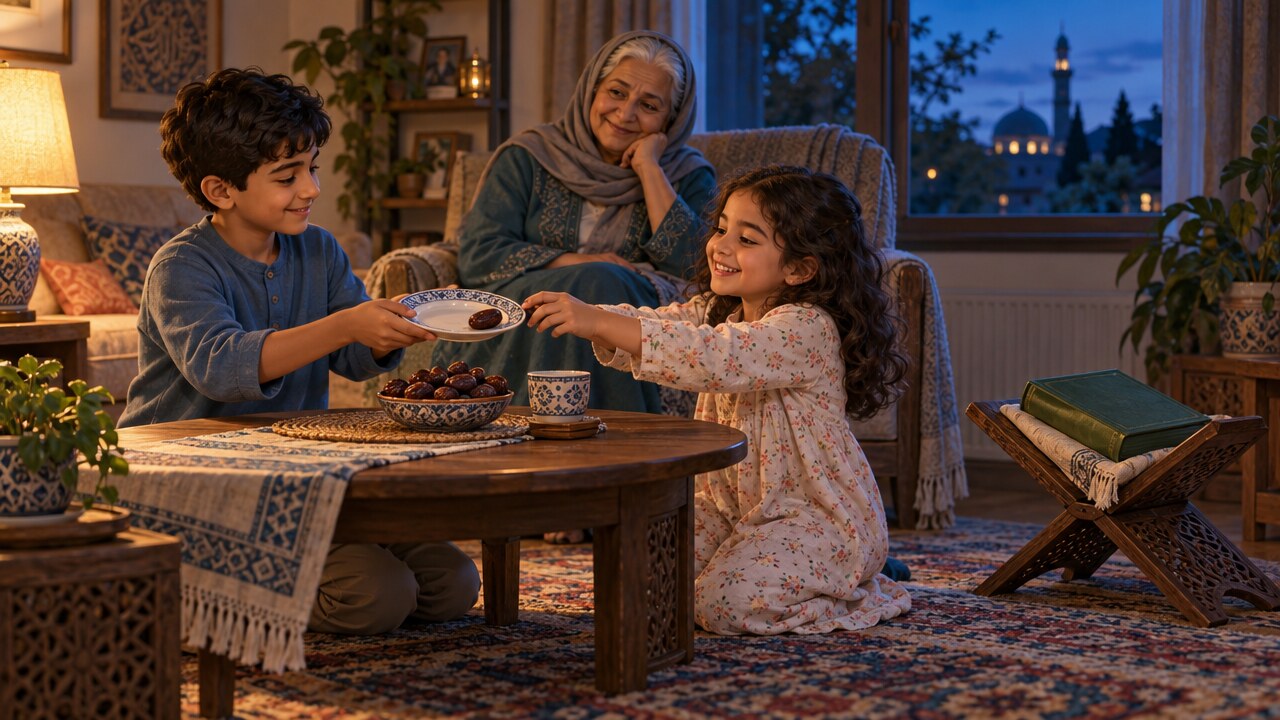
A boy offering his younger sister the last date from a plate in a lamp-lit front room, their grandmother watching
Strand one

Islamic Studies & Ethics

Knowing the Creator, and what that knowledge asks of a person.

The Qur’an with Tajweed and the Moral Studies lessons live here, taught as one subject rather than two: what was revealed, and what it asks of a person on an ordinary Tuesday. Recitation and a child-friendly explanation of meaning run alongside each other from the start, because a child who can pronounce a verse perfectly and has no idea what it is asking of them has been taught only half of it. Hifz is there for those memorising.

The ethics half is not a list of rules to recite back. It works from situations a child actually meets — the sibling, the classmate, the thing nobody saw them do — and asks them to decide, out loud, with reasons. This strand is the thread the other four are tied to. It is not the religious compartment of the week.

  • Qur’an: recitation, Tajweed, Hifz
  • Meaning taught beside recitation
  • Moral Studies, adab, Islamic values
  • Decisions argued, not rules recited
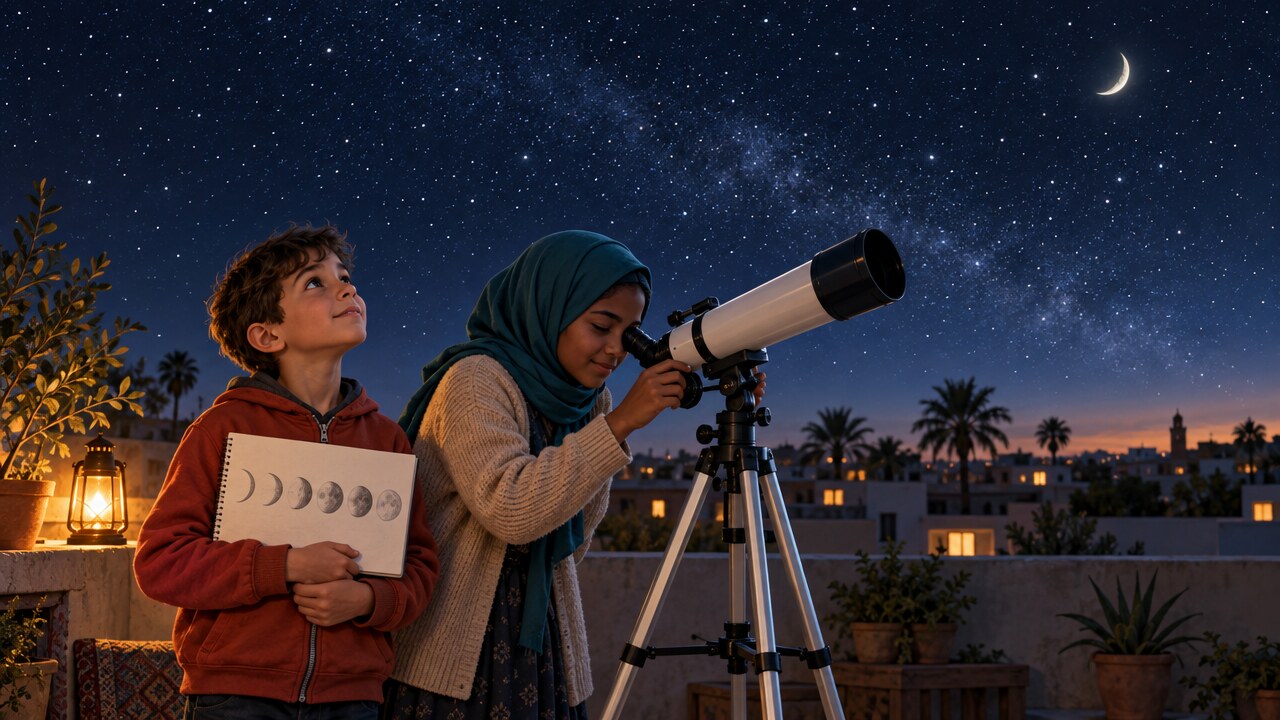
A girl at a small telescope on a rooftop at dusk, a boy beside her holding a sketchbook of drawn moon phases
Strand two

Science & Innovation

Studying creation closely enough to recognise the Creator in it.

The school syllabus, taught properly — and taught as the study of what Allah made. This is the strand where the whole argument of this page is either true or it is not. A lesson on the water cycle is a lesson on the water cycle: the evaporation, the condensation, the diagram, the test. It also ends with a question that has no mark scheme. Who sends the rain?

The connection is made by asking, never by asserting. We do not quote scripture at a science lesson or claim a verse predicted a discovery; our lessons carry a “Signs of Allah” strand and an open question, and the child does the rest. Along the way they meet the astronomers, physicians and mathematicians of their own tradition standing inside the work rather than in a footnote — which matters most for the child who has quietly concluded that science belongs to somebody else.

  • General Studies: CBSE, NCERT, ICSE
  • Abacus and mental arithmetic
  • “Signs of Allah” reflection questions
  • Muslim scientists inside the syllabus
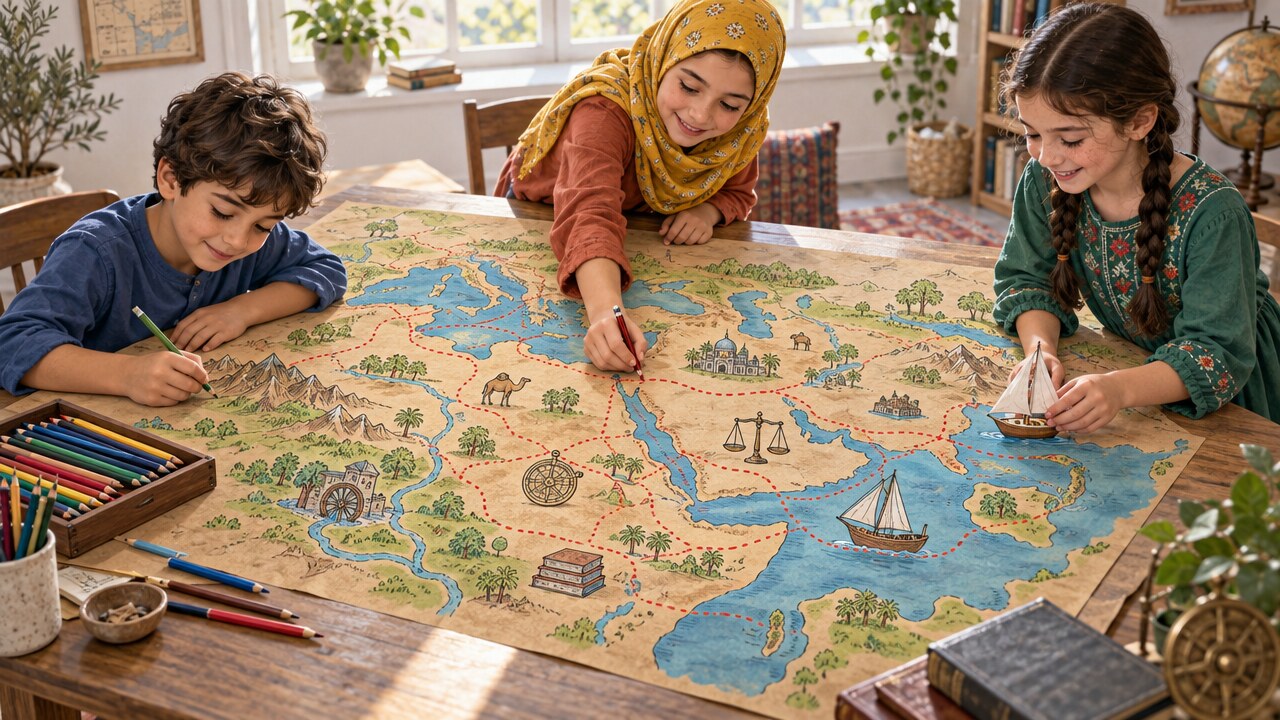
Three children leaning over a huge hand-drawn map on brown paper, adding routes between small drawn symbols
Strand three

History & Social Studies

What people built, and what they owed each other while building it.

How civilisations borrowed from one another and what each owed the last. Numerals that travelled from India through Baghdad into Europe; surgery, optics and navigation passed between people who often never met. For a child growing up between two cultures, the point is that these are not two stories but one, and that their own share of it is still to be written.

It is also where a child learns that a society is something people either maintain or let fall down — which is the groundwork for the service strand further down. History taught as a list of dates teaches nothing about obligation; history taught as what people owed each other teaches a great deal.

  • Global civilisations and their exchanges
  • Islamic contributions in context
  • Belonging in two cultures
  • Society as something maintained
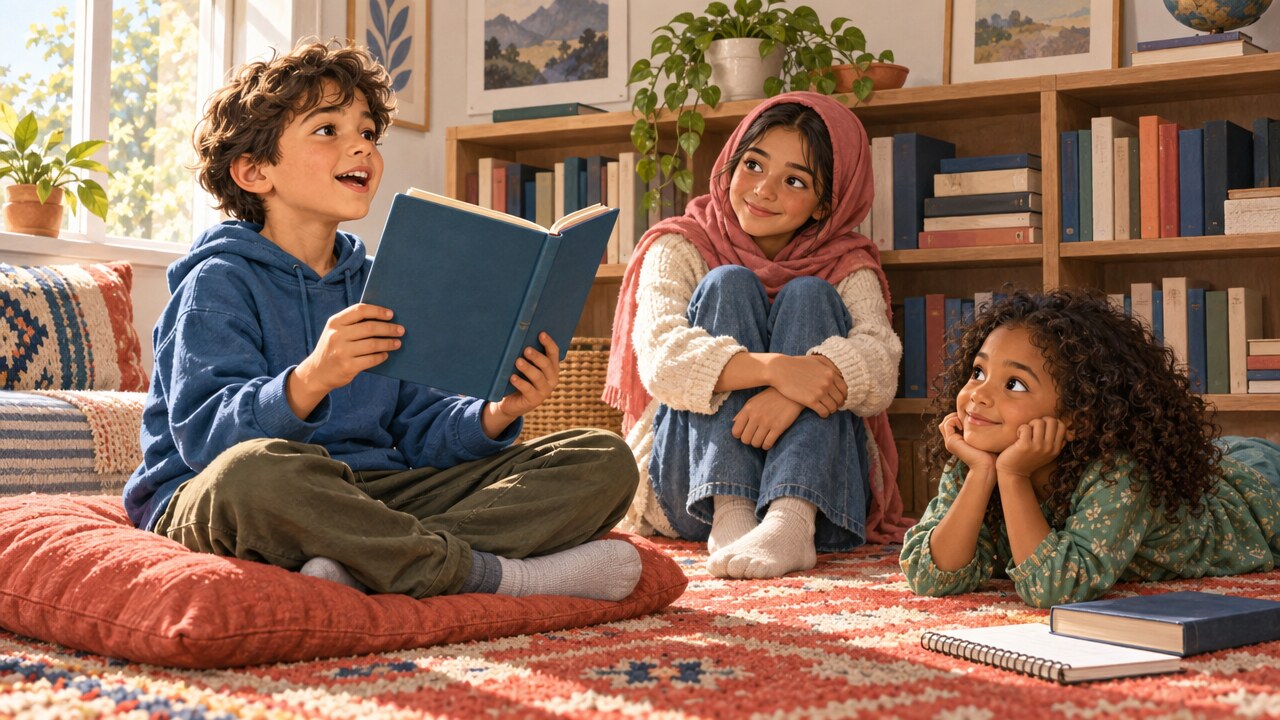
A boy reading aloud from a book to two other children in a sunlit reading corner, both listening closely
Strand four

Language & Literature

Understanding what is said, and being understood in return.

Arabic to read the Qur’an and to understand it, and Malayalam, English or Hindi for home, school and the people they will write to. Reading, pronunciation, phrasing, writing, composition and the thinking underneath them. Arabic is taught as a language with meaning attached rather than as a set of shapes to decode, because decoding without comprehension is where most children stall and quietly give up.

The second language matters as much as the first. A child who can recite beautifully and cannot explain their deen to a classmate in the language that classmate speaks has been equipped for half their life. Lessons are delivered in the language your child is most at home in, which for most of our students is English. Malayalam, Arabic, Hindi and Urdu are there for the children who need them. Following along and understanding are not the same thing.

  • Arabic: reading with comprehension
  • Malayalam, English, Hindi
  • Composition and speaking aloud
  • Taught in the child’s own language
Strand five

Character, Work & Service

Becoming a productive person who is of use to the people around them.

Worship is not only what happens on the prayer mat. Doing honest work well, finishing what you start, carrying your share and being someone your neighbours are glad to have nearby — this is where a child practises it, and it is assessed as seriously as anything else here. Habits of work come first: attention, persistence through the part that is difficult, and a job checked before it is called done.

Then confidence, which small classes make possible. A teacher who knows your child can tell when confidence is the thing that needs teaching, and can give them the question they are ready to answer in front of others. And then service, which is the point of the other four: competence that never reaches anybody else is a private hobby.

  • Work habits: attention, persistence, finishing
  • Speaking up in a small group
  • Responsibility at home and outside it
  • Leadership as service, not status

In practice

What this looks like in an actual lesson

An integrated curriculum is easy to claim and easy to fake. These are three ordinary lessons, described the way a teacher would describe them afterwards.

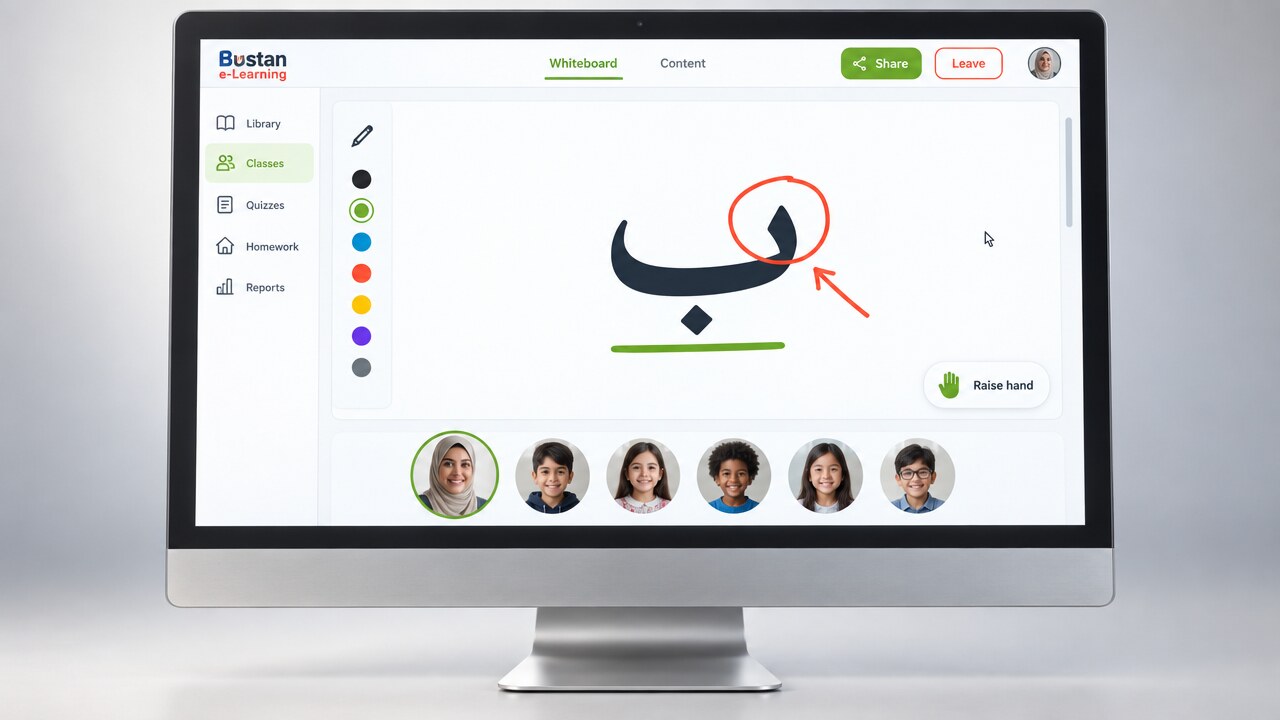
A lesson on the Bustan whiteboard, the teacher drawing it out with the class watching

The water cycle

Science · age 9

Evaporation, condensation, precipitation, the diagram labelled correctly, the quiz at the end. The lesson carries a “Signs of Allah” heading and closes on one line with no mark scheme: Who sends the rain? Nobody answers it for them, and nothing is quoted at them. The science is not watered down to make room for the question; the question only works if the science was good.

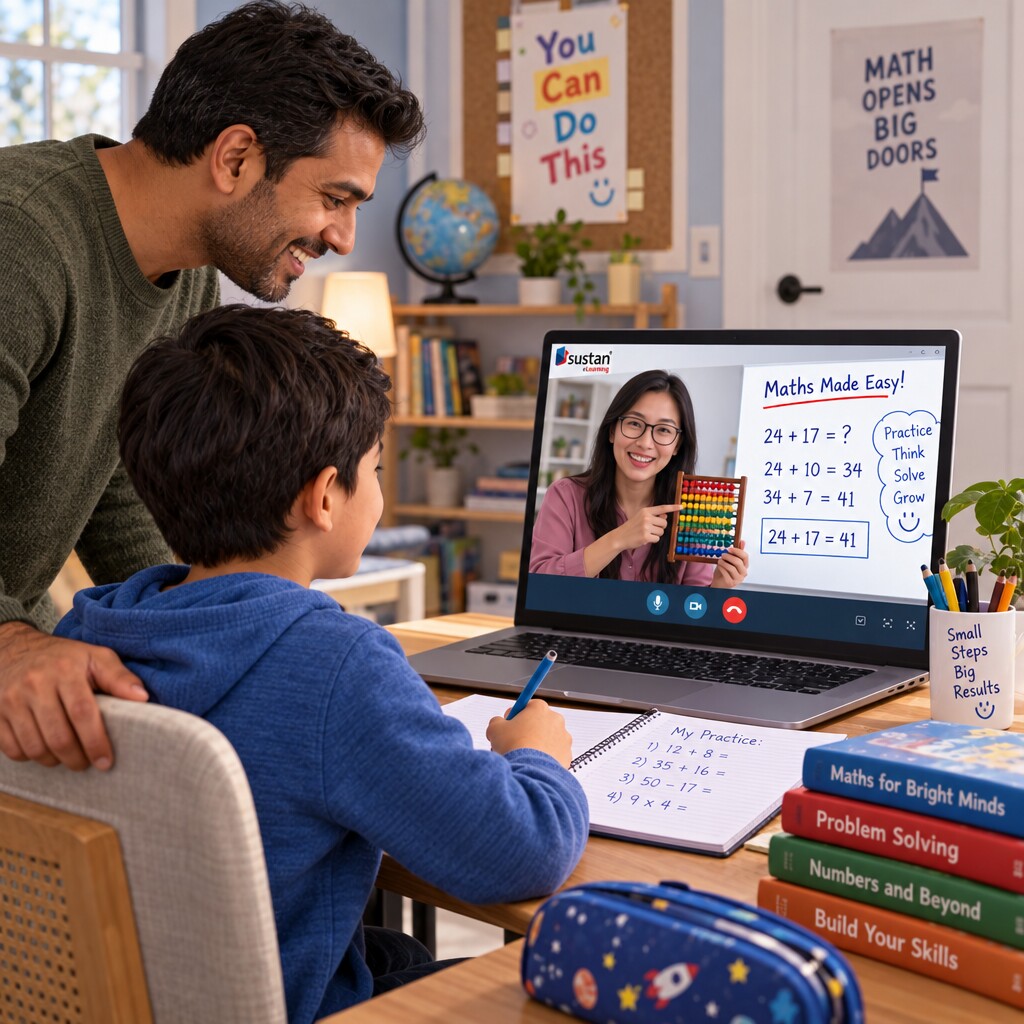
A boy working through a problem with his teacher on screen while his father watches

Abacus, the difficult row

Abacus · age 8

A child gets a row wrong four times. The teaching point stops being arithmetic and becomes the thing the character strand is actually about: staying with something past the moment it got unpleasant, and checking the work before calling it finished. The fifth row comes out right. What was taught there was not mental maths.

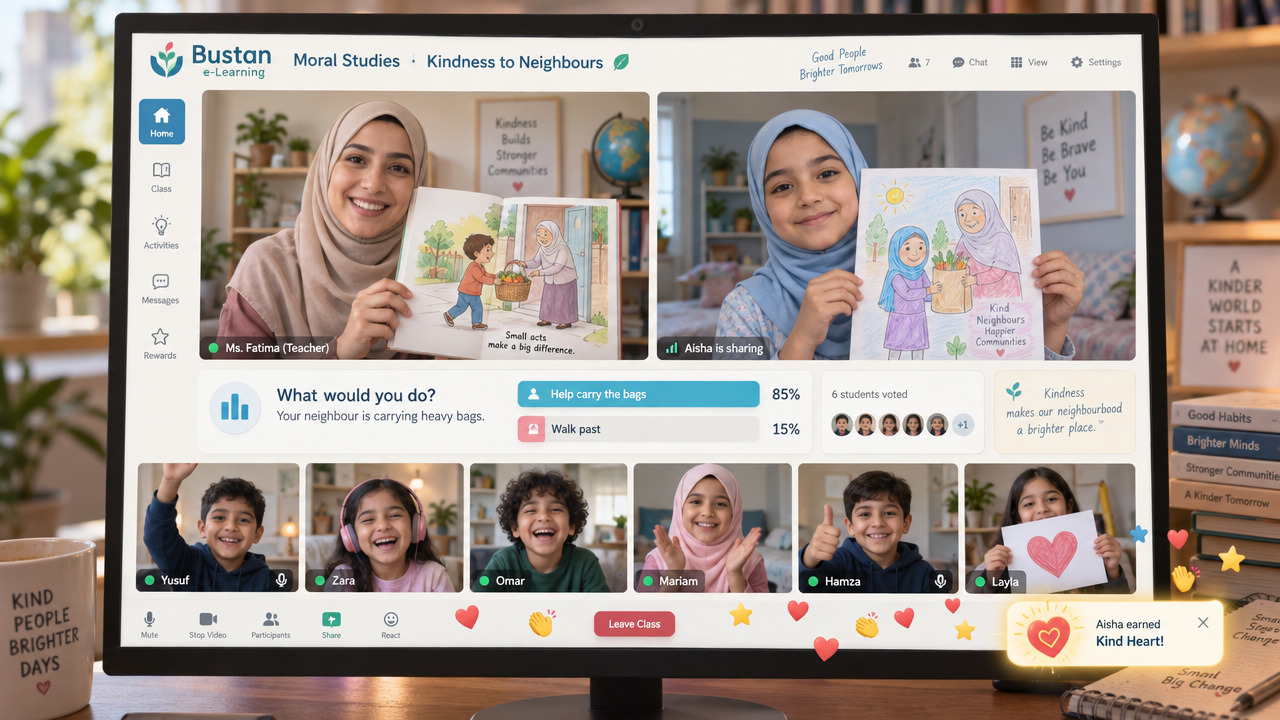
A Moral Studies lesson: the teacher sharing a story, a student showing her drawing, and the class on screen

The thing nobody saw

Moral Studies · age 11

A situation with no supervising adult in it, and a choice. The children argue it out and give reasons, in the language they think in. The teacher does not close it with a rule — she closes it by asking who would know anyway. Recitation is in a different lesson; this is the same subject.

Subjects

Which subject carries which strand

Your child enrols in subjects, not in strands. This is how the subjects on the courses list map onto the strands above — every subject carries more than one, which is the whole arrangement.

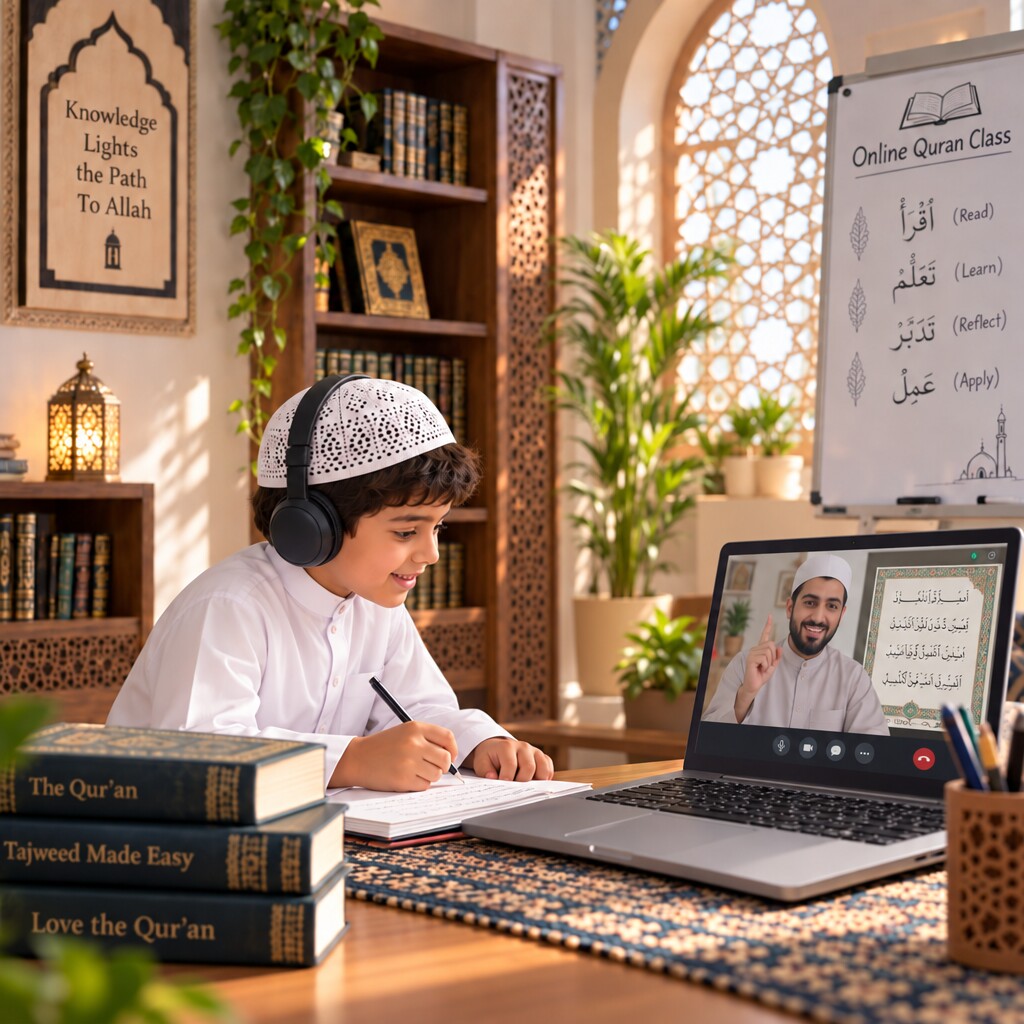
A boy reciting with his Qur’an teacher in a live online class

Holy Qur’an

Strands one, four and five

Recitation, Tajweed and Hifz, with meaning taught beside them — so it is a language subject and a character subject as well as the first strand.

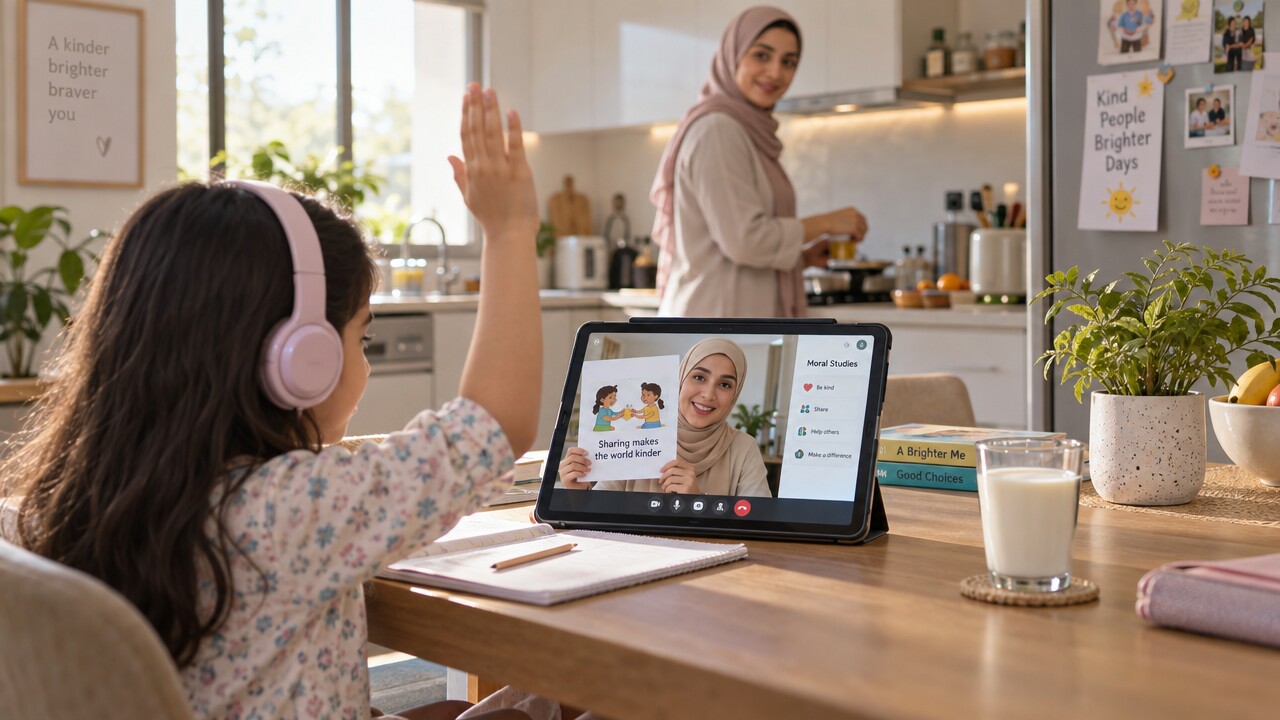
A girl raising her hand during a Moral Studies class on a tablet at the kitchen table

Moral Studies

Strands one, three and five

Adab and Islamic values worked through real situations, which is where ethics, society and the habits of a useful person meet.

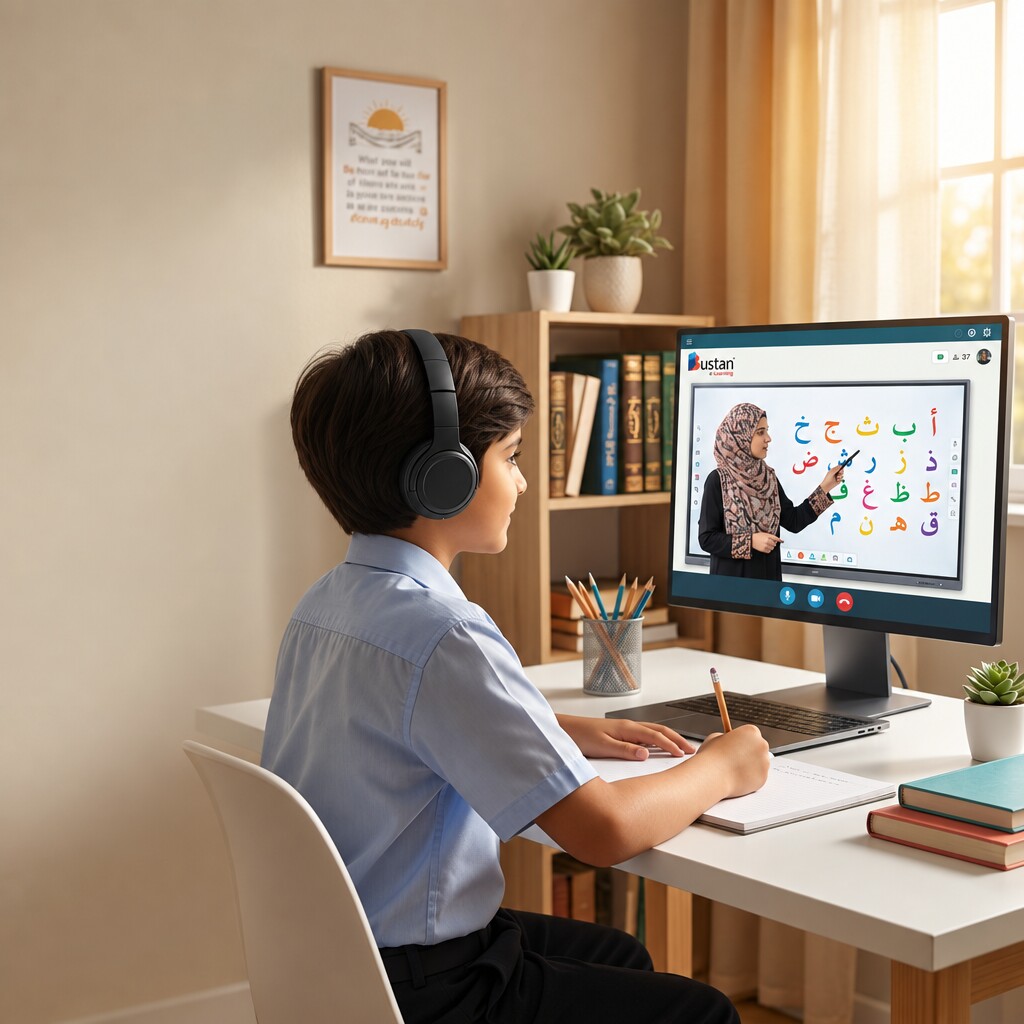
A child reading Arabic letters with her teacher on screen

Languages

Strands four, one and three

Arabic, Malayalam, English and Hindi. Arabic opens the first strand; the others are how a child explains it to everyone else.

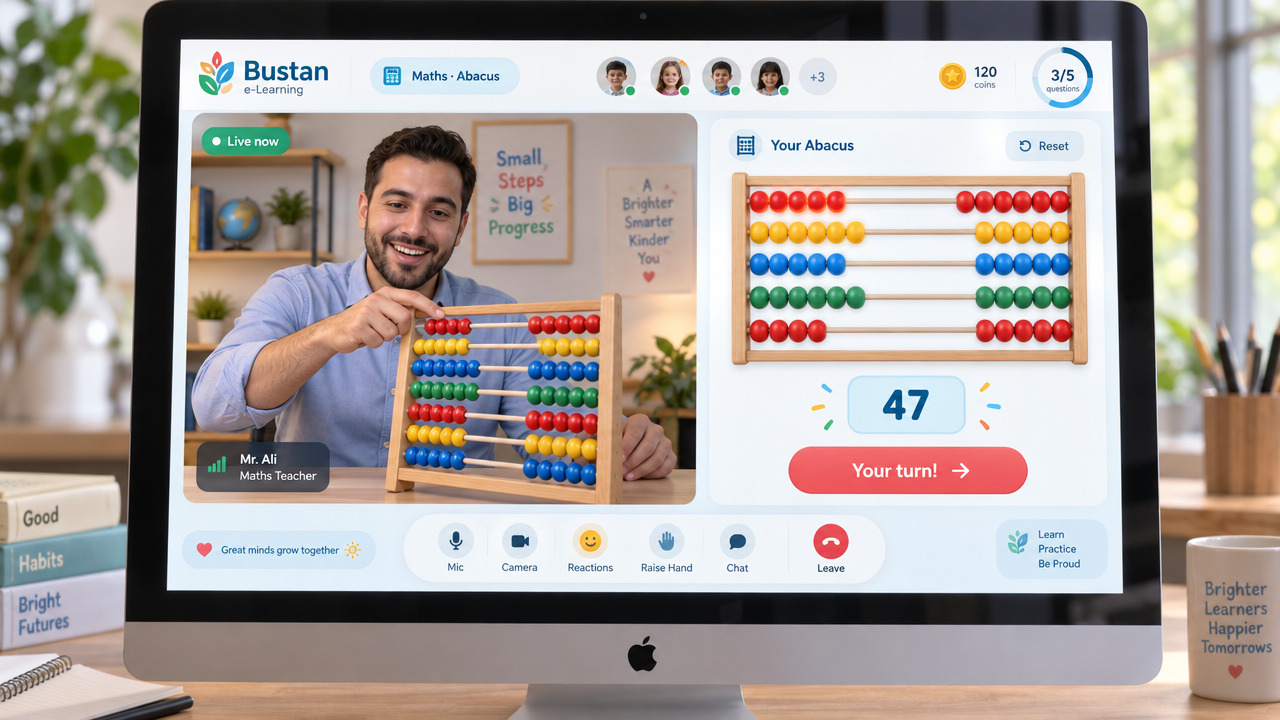
An abacus lesson: the teacher demonstrating beads beside the on-screen abacus the class is working with

Abacus

Strands two and five

Mental arithmetic for speed, concentration and retention — and, just as deliberately, for persistence and self-checking.

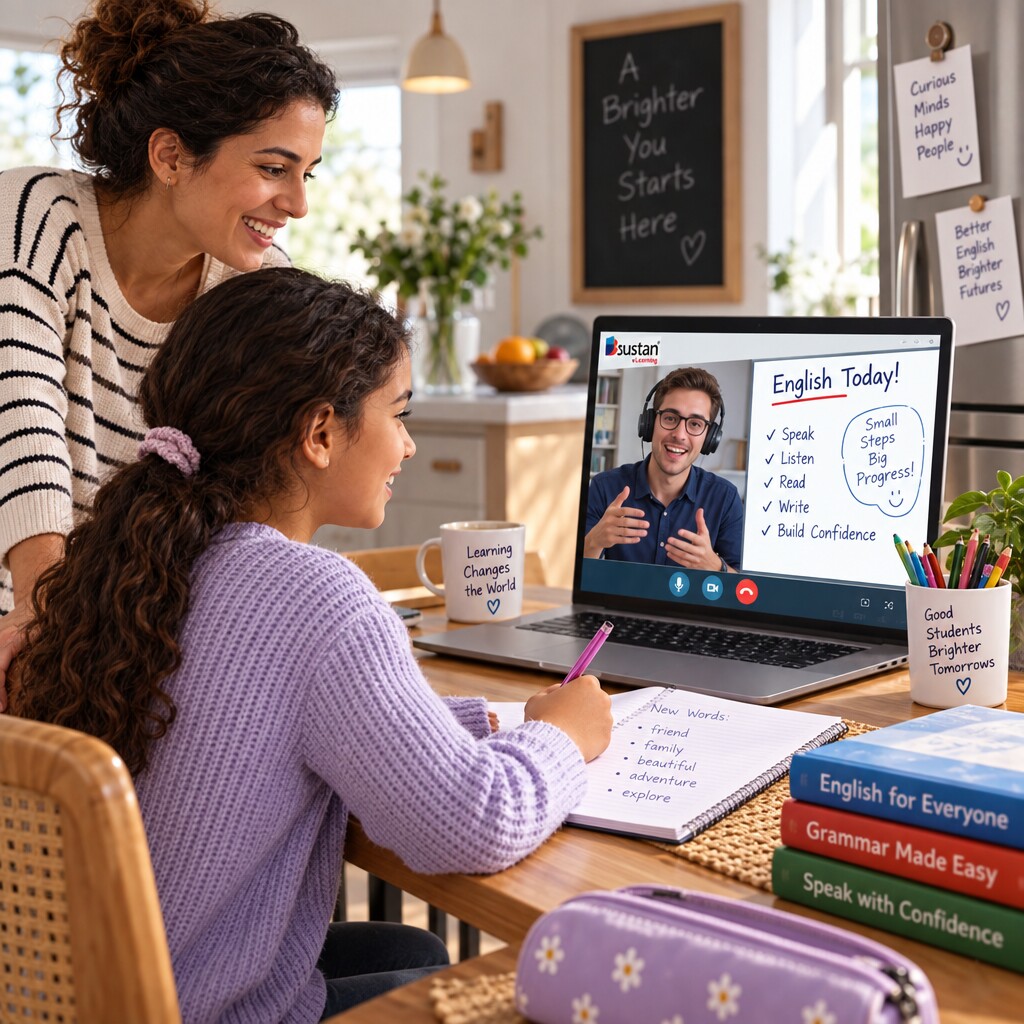
A girl working through a school subject with her teacher on a laptop, her mother beside her

General Studies

Strands two, three and five

Coaching across the whole school syllabus — CBSE, NCERT and ICSE — taught as the study of what Allah made rather than as a secular half of the week.

How it is taught

The curriculum only works if the class does

Small classes, or one to one

None of the above survives a room of thirty. Asking a child what they think, and waiting for the answer, needs a group of two to four — or one to one where that is right. It is also the only way a teacher notices that the confidence, not the content, is what is missing.

  • Two to four per batch
  • One to one where it fits
  • The same teacher each week

Taught in English, the language your child thinks in

Classes are taught in English, with Malayalam, Arabic, Hindi or Urdu where a child is more comfortable — chosen for the child rather than the teacher. A reflection question only does its work if the child can actually answer it, which means answering it in their own words.

  • English-medium by default
  • Chosen per child

On a platform built for it

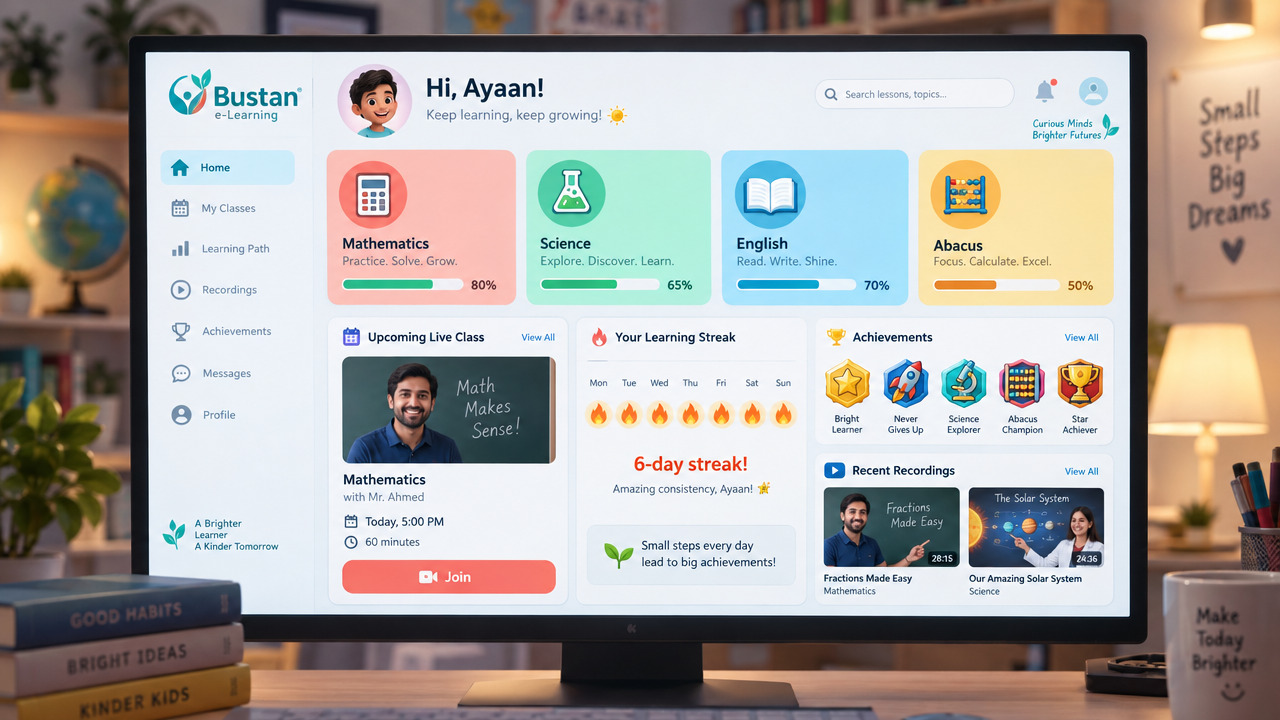
Lessons are authored in house as interactive activities, reviewed before they reach a child, presented live, and followed by homework set in the same place. The reflection questions and the strand headings are part of the lesson content itself rather than something a teacher remembers to add. See how the platform works.

  • Authored in house
  • Two-stage review
  • Homework in the same place
A child’s dashboard on the Bustan platform, showing their classes, progress and the lesson they are working through

Checked every day, not every term

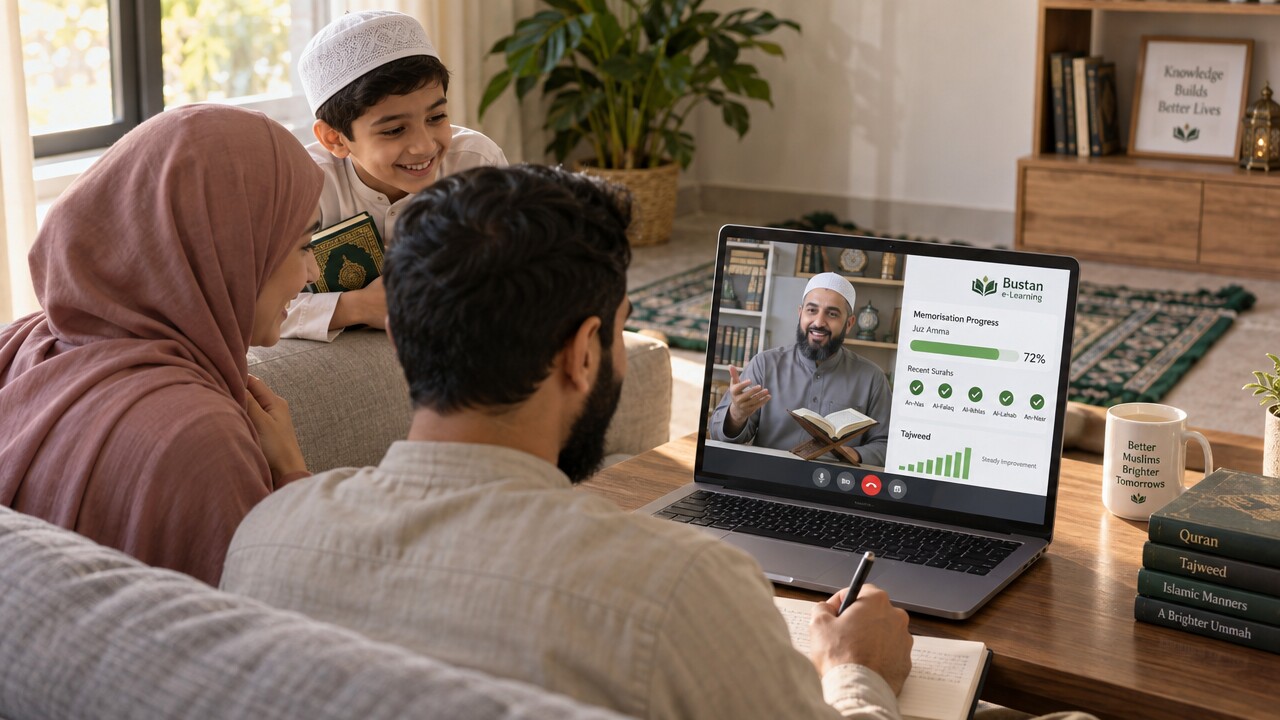
Quality assurance and feedback collection happen daily, and assessments are regular. The updates you receive are built from what the platform recorded as the class happened, which is why they are specific about what your child actually did.

  • Daily quality checks
  • Regular assessment
  • Reports from recorded work
A mother and father going through their child’s Qur’an progress report with his teacher on a laptop

See a lesson before you decide

The curriculum is easier to judge from one class than from one page.